Back to Blog
November 20, 2026
Built on Miles | Chapter 11
Adaptation and Resilience
Learning When to Fight, When to Pivot, and When to Let Go
By Daphne Kirkwood, Founder of iDaph Events
 When I think about all the challenges we've faced over 15 years of iDaph, my first reaction is usually a long sigh.
Oh, man. Where do I even begin?
There have been so many unexpected twists and turns along the way. Every race, every season, every obstacle has taught me something. Some lessons were small, and others completely changed the way I run my business, lead my team, and approach life. And then there were the experiences I would have preferred never to go through at all.
COVID-19. Hurricane Helene. Flooding that forced us to postpone the Black Bear Half Marathon and 8K. And countless other challenges that come with producing outdoor endurance events in Western North Carolina.
Looking back, I can see how each experience prepared me for the next. But when I was in the middle of those situations, I certainly didn't feel prepared. I was just trying to figure out what to do next.
When the World Stopped
March 2020 is a period of my life that I've pretty much packed into a zipped-up bag and placed on the top shelf of a closet. I rarely want to get it down and open it.
I was just coming out of two and a half years of cancer and chemotherapy treatments. I was exhausted, physically and emotionally, from navigating a health crisis I never asked for and couldn't control. I was finally ready to move forward and get back to some sense of normalcy.
And then COVID happened.
At the beginning of March, I remember hearing rumblings about a virus spreading. Like so many people, I didn't think much of it at first. It seemed far away, and we were completely immersed in preparing for the Asheville Marathon and Half Marathon, our biggest event of the year.
March is always an all out sprint for our team. We had medals, shirts, food, snacks, water station supplies, equipment, and everything else needed to produce the marathon. We were staging supplies at our warehouse, organizing equipment, and checking things off the enormous race-week to-do list. The wheels were already in motion.
Then, during race week, everything changed.
What had seemed like a distant concern suddenly became a worldwide emergency. Government restrictions prohibited large gatherings, and just like that, the marathon couldn't happen. It wasn't our decision to cancel. We had no choice, and there was no playbook for what came next.
I was scared. My immune system was compromised from chemotherapy, and we were learning about a dangerous virus that nobody fully understood. At the same time, I was terrified about what this meant for iDaph.
The Asheville Marathon was the event that helped sustain our company financially. By race week, the vast majority of expenses had already been incurred. Shirts, medals, supplies, equipment, staffing, planning — the work had already happened. And now there would be no race.
Participants understandably wanted refunds. I understood their disappointment. I'm an athlete, too. I know what it means to train for months toward a goal and have that opportunity suddenly taken away.
But the reality was that we didn't have the money to refund everyone. It had already been spent producing the event. We weren't a large corporation with enormous financial reserves or sponsors who could absorb the loss. And when I looked into our insurance policies, I discovered that pandemics were excluded from coverage. Neither our general liability policy nor our special event insurance would reimburse us.
Some people were understanding. Others were angry, and some of the responses were incredibly hurtful. That was one of the hardest parts.
I have always cared deeply about our participants and our community. Not being able to provide refunds wasn't a decision made out of greed or a lack of compassion. We simply didn't have the money to give back.
"If we had refunded everyone in full, iDaph wouldn't exist today."
I had to accept that I couldn't make everyone happy. I could only make the best decisions possible with the information and resources I had.
 One of the first things I did was create a virtual option for the marathon. I knew how much training people had put into preparing for their races, and I didn't want them to lose that sense of accomplishment. I ran the half marathon virtually myself that weekend, shared the experience on social media, and encouraged others to complete their distances wherever they lived. They could still earn their medals, receive their shirts, and celebrate what they'd worked toward.
It wasn't the race we had planned, but it was something we could still give our participants.
When the Business We Built Came Apart
At the beginning of 2020, iDaph had five full time employees. We had an office with an attached warehouse, and our team came to work together every day to plan events, manage projects, and work months ahead on our race calendar. We had spent nearly a decade building that structure.
Initially, I was optimistic. I'm naturally a glass half full person, and I thought we'd get through the marathon cancellation and be back to normal relatively quickly.
But the weeks passed, March became April, restrictions continued, and there was no indication of when we could return to doing what our company existed to do.
How do you plan future events when you don't know if events will even be allowed?
Our office lease was coming up for renewal in May. I asked our landlord whether we could have some temporary relief while we figured out what was happening. Unfortunately, that wasn't an option.
I knew I couldn't responsibly commit to another year of rent without knowing when we'd be able to produce another race. So we made the difficult decision to move out.
With help from a few people, we packed up our equipment and moved everything into a large storage unit. Our team was already working remotely for safety, but over time, the staff structure dissolved, too. Some employees found other opportunities, and I had to lay others off.
It was heartbreaking to watch the company I had worked so hard to build come apart in a matter of months. We had gone from a bustling office and warehouse with five full time employees to equipment in storage and an uncertain future.
In many ways, it felt like I was starting iDaph all over again.
But somewhere around late April or May, I started feeling a little hope again. Not because COVID was ending, because it certainly wasn't, but because I had made a decision.
I was going to keep going.
Finding Hope in Doing Things Differently
Moving our equipment into storage and eliminating the office overhead gave us some breathing room. We didn't know what the future would look like, but at least we had created an opportunity to figure it out.
And that's when my creative side really started working.
Instead of asking when we could go back to doing races the way we'd always done them, I started asking how we could do them differently.
We created a virtual version of our Lung Buster Time Trial Series. Participants could go out independently, ride the marked routes, and submit their times. We started a podcast to keep people connected, and on Fridays, I hosted virtual runs where participants could call into a phone number while they were out running. We could talk and share the experience, almost like running alongside a friend.
It was a simple idea, but during a time when people were isolated, that connection mattered.
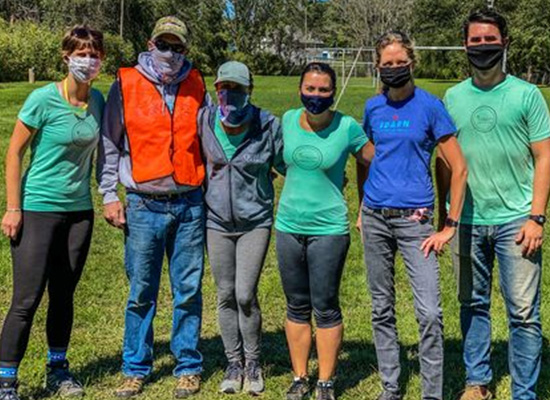 Later that summer and into the fall, we created the Pop Up 5K series in a local park. Instead of gathering everyone at one start line, runners could arrive anytime during a two hour window, complete their race while maintaining distance, and have their results compiled afterward. We designed the experience around safety, limited contact, and avoiding crowds.
There wasn't a manual telling us how to do any of this. We brainstormed, problem solved, tried things, and adjusted along the way. And honestly, it felt so good to be creating again!
I began to realize that while traditional race standards and best practices were important, they didn't have to limit what was possible. We could do things differently. We could put our own spin on an event and create something that still gave people a goal, a sense of accomplishment, and a connection to their community, even if it looked nothing like a traditional race.
COVID forced me to become more creative, more flexible, and more willing to trust my own judgment.
It also fundamentally changed how iDaph operates. Today, our team works virtually. We still collaborate through meetings and communication, but our structure is much more task oriented than the traditional office environment we once had.
We rebuilt the business around a different way of working. Not necessarily the way I would have chosen in 2011, but a way that works for who we are today.
Hurricane Helene: A Familiar Feeling, a Different Response
When Hurricane Helene devastated Western North Carolina in September 2024, I remember having a familiar feeling.
"Here we go again."
It felt like COVID all over again, even though the circumstances were completely different.
We were right in the middle of our fall race season. Events were coming up, expenses had already been incurred, and suddenly the future was uncertain. Again.
Roads were damaged, trails were destroyed or inaccessible, and parks, bridges, pools, and other facilities we relied on were affected. We had to postpone the Black Bear Half Marathon and 8K and the TreeTops Trail Race. Other programs, including our triathlons and swimming opportunities, faced longer term disruptions.
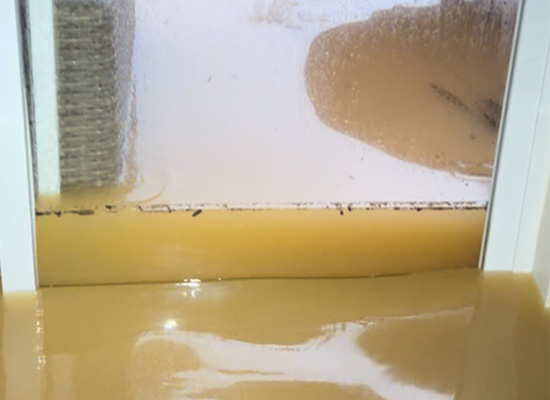 And at the same time, I was dealing with the storm personally. My home had flooded, my neighborhood was affected, and we were without power and water for over a week.
There was so much to manage, both personally and professionally. And once again, there were the financial concerns. We had already spent money preparing for events, and participants were understandably disappointed and asking about refunds.
It was frustrating, exhausting, and honestly, sometimes I just wanted to ask, why do we have to deal with this again?
But something was different this time.
I had been through COVID. I knew what it felt like to have an entire event calendar thrown into uncertainty. I knew what it meant to make difficult decisions without having all the answers. And perhaps most importantly, I knew we could survive it.
I wasn't coming out of a health crisis this time. I had more physical strength and energy, more experience, and more confidence in my ability to navigate the unknown.
I also had something else that had become an important part of my life: yoga.
Since 2018, yoga has been a consistent practice for me. Over the years, it has helped me learn how to find peace with circumstances I can't control. Not necessarily to avoid stress, but to recognize it, process it, and find a way not to carry all of it in my body.
During Helene, I found that I could get to that place of acceptance much more quickly than I could have years earlier. I could acknowledge how difficult and inconvenient the situation was without allowing it to completely consume me.
I knew there would be problems to solve, events to reschedule, and disappointed participants to communicate with. But I also knew we would figure it out.
That confidence didn't come from reading a book or attending a leadership seminar. It came from living through difficult experiences and discovering that I was capable of handling more than I once believed.
Black Bear: Learning When to Let Go
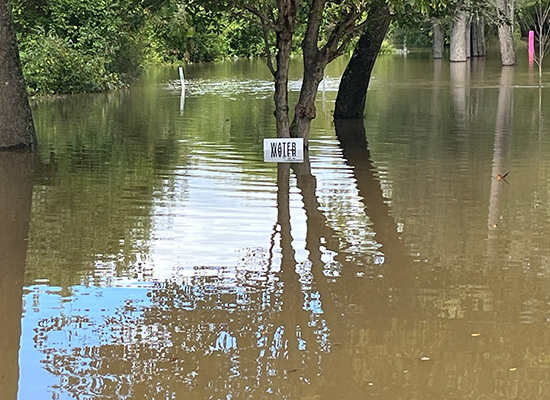 In October 2026, we faced another major challenge when significant rainfall caused widespread flooding around the Black Bear Half Marathon and 8K course in Hendersonville.
Nearly 1,100 people were registered, our team had spent months preparing, and we were determined to make the race happen.
As the weather forecast became increasingly concerning, I started doing what I've always done. Problem-solving. I developed alternate course plans, alternate operational plans, and alternate volunteer assignments. I had two complete races ready to go.
Participants probably had no idea how much work was happening behind the scenes to give the event every possible chance of taking place. And that's okay. That's part of being a race director.
I wasn't willing to cancel or postpone simply because the forecast looked bad. Living in Western North Carolina has taught me that weather can vary dramatically from one community to another. On the day Hendersonville experienced flooding, Asheville wasn't experiencing those same conditions.
You just never know.
So I kept working through the possibilities, evaluating conditions, exploring alternatives, and doing everything I could to make the event happen safely. But eventually, there was nothing more I could do. The course was flooded, access was compromised, and the conditions weren't safe.
We had to postpone.
What I'm most proud of isn't necessarily that we came up with multiple backup plans or that we eventually held the race in November. It's how I handled myself through the process. I stayed focused and grounded. I didn't allow myself to get pulled into the chaos, the drama, or the emotional reactions that can surround a difficult decision.
I know participants are disappointed when races are postponed. I understand that because I'm a runner, too. I know what it means to train for months, arrange travel, and build your schedule around a race. But I've also learned that I don't need to read every negative comment or absorb every frustrated message to understand that disappointment. Protecting my own peace is important, too.
"I can be empathetic without carrying everyone else's emotions."
After exhausting every possible option, I reached a point where I could say, I did everything in my power to make this happen. Now I have to release it.
That was a powerful moment for me. Not because I was giving up, but because I was accepting something that was genuinely outside my control.
When we finally held Black Bear on November 8, approximately 600 participants showed up. We had made it to the other side, and what meant so much to me was that participants felt communicated with, listened to, and cared for throughout the process.
That's what I wanted. Not a perfect situation, just the best possible response to an imperfect one.
Fifteen Years of Lessons in My Toolbox
 One thing I've realized after 15 years of producing events is that there is no such thing as a perfectly predictable race. Weather changes, roads close, people get sick, equipment fails, and plans fall apart. Sometimes an entire world changes overnight.
Every event we've produced has taught me something. Every mistake, unexpected obstacle, and difficult decision has added another tool to my toolbox. And the more experiences I've had, the more I've learned to trust myself.
Early in my career, I was focused on doing things the right way. Following industry standards, learning best practices, and creating systems and procedures that would make our events professional, consistent, and sustainable.
I still believe deeply in those things. But I've also learned that doing things the right way doesn't mean doing them exactly the same way everyone else does.
Sometimes the best solution is one you haven't seen before. Sometimes you have to create it yourself. And sometimes you have to let go of something you worked incredibly hard to build because holding on to it would prevent you from moving forward.
I've also learned that resilience doesn't mean fighting every battle until you're completely depleted. Sometimes resilience means knowing when you've done enough, when you've explored the options, when you've given something your best effort, and when it's time to accept what you cannot change.
If I could go back to March 2020 and talk to the version of myself who was watching everything she'd worked so hard to build begin to unravel, I know what I would tell her.
There is so much in this life that is unpredictable and completely outside of your control. You can't control every storm, every setback, or every unexpected turn. But you can control how you respond.
And you are going to discover just how sharp, smart, resourceful, and creative you really are.
You have the ability to take something that feels dark, overwhelming, and downright awful and find a way to turn it into something new. Something fresh. Something beautiful. Maybe even something fun.
"You are not afraid of change. You embrace it. You are not afraid to make big decisions, even when they're uncomfortable or unpopular. You make them with grace and confidence, and then you move forward."
It has taken me 15 years, countless races, unexpected challenges, mistakes, and more than a few storms to really understand that about myself.
And I think that's what I'm most proud of.
Not that I've managed to avoid the hard things, because I certainly haven't. But that I've learned to trust myself through them.
Fifteen years later, iDaph is still here. It looks different than it did in 2011, and it certainly looks different than it did in March 2020.
So do I.
And that's a beautiful thing.
Because being Built on Miles was never just about the races we've produced or the finish lines we've crossed. It's about everything we've learned along the way, the people we've become, and the courage to keep moving forward, even when the road ahead looks nothing like we expected.